
Taj Mahal Tour: A Complete Guide to Exploring Agra’s Iconic Monument
A Taj Mahal Tour is one of the most memorable ways to experience India’s history, architecture, culture, and living heritage. Located in Agra, Uttar Pradesh, the Taj Mahal is more than a world-famous monument; it is a carefully preserved expression of Mughal architecture and a central highlight of many India travel itineraries. For travellers planning an Agra Taj Mahal experience, understanding the monument, the best way to reach it, nearby attractions, and practical planning details can make the visit considerably more rewarding.
Tour Guide in India, founded in 2015 by three government-approved professional tour guides, specializes in personalized experiences across India’s major heritage destinations. The company’s guides are described as approved by the Ministry of Tourism and Culture, Government of India, and the business reports having served more than 3,000 travellers. Its experience includes private Taj Mahal and Agra tours, Delhi-to-Agra excursions, heritage walks, and broader Golden Triangle itineraries.
Why Visit the Taj Mahal in Agra?
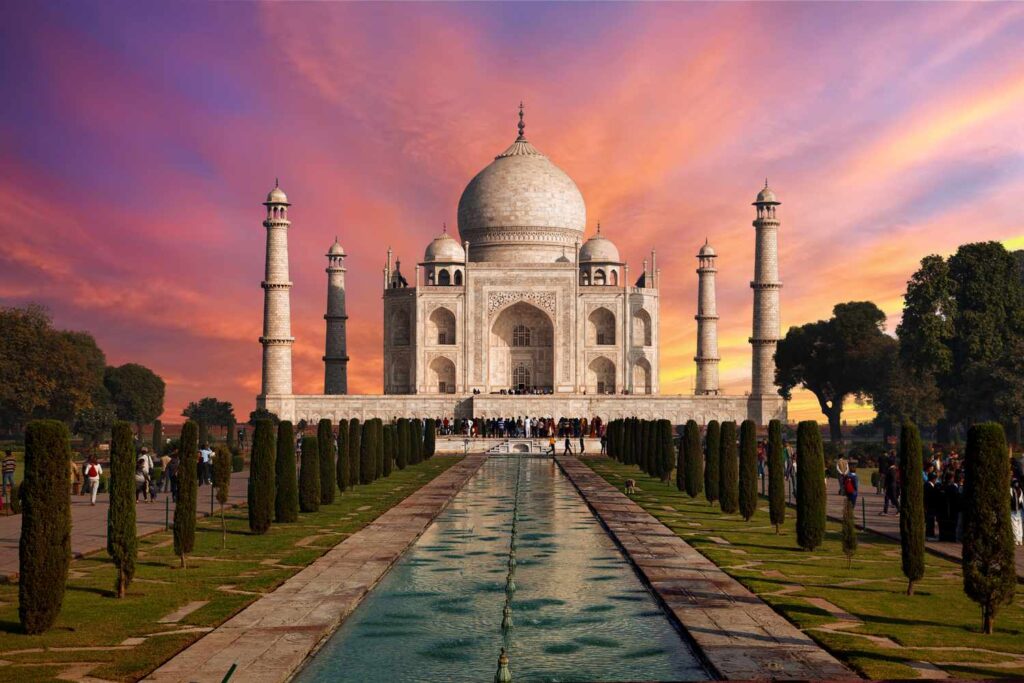
The Taj Mahal was commissioned by Mughal emperor Shah Jahan in memory of Mumtaz Mahal and is widely recognized for its white marble architecture, symmetrical gardens, decorative craftsmanship, and monumental setting beside the Yamuna River. Its importance comes not only from its visual beauty but also from the craftsmanship and historical context surrounding its construction.
For first-time visitors, a guided experience can provide considerably more context than simply walking through the monument. Architectural details, inscriptions, decorative motifs, Mughal traditions, and the relationship between the Taj Mahal and Agra’s wider history are easier to appreciate when explained on location.
A professional guide can also help travellers structure the visit efficiently. This is particularly useful during busy travel periods when entrance areas, security procedures, and popular viewing points can become crowded.
Best Time for a Taj Mahal Tour
The ideal season depends on what type of experience you want. The cooler months are generally comfortable for sightseeing, particularly from October through March. Winter mornings can provide pleasant conditions for exploring Agra’s heritage sites, although fog can occasionally affect visibility.
Many travellers prefer an early-morning visit because temperatures are more comfortable and the monument can have a calmer atmosphere than during the busiest parts of the day. Sunrise photography is another reason travellers choose an early itinerary.
Summer can be considerably hotter, making early starts especially practical. Travellers visiting during warmer months should carry water, use sun protection, and plan outdoor sightseeing around the strongest heat.
A knowledgeable local guide can help adjust the itinerary according to weather, visitor conditions, and the traveller’s priorities.
Taj Mahal Agra Timings and Planning Your Visit
Travellers should always confirm the latest official visiting schedule before departure because operating arrangements can change. The Taj Mahal is traditionally closed to general visitors on Fridays, while night-viewing arrangements operate separately and are subject to specific conditions.
The phrase Taj Mahal Agra timings is therefore important when planning an itinerary, but travellers should not rely on an old timetable found online. Checking current information shortly before the trip is the safest approach.
If you are travelling from Delhi, start time becomes particularly important. A private Delhi to Agra Taj Mahal itinerary can be arranged around the preferred visiting period, allowing travellers to spend their time in Agra rather than losing unnecessary hours in transit.
Agra Taj Mahal Ticket Price and Entry Planning
The Agra Taj Mahal ticket price depends on factors such as visitor category and the areas included in the visit. Ticket policies and prices can change, so travellers should verify the current official rates before booking.
A well-organized private tour can make the process simpler by helping visitors understand where tickets are obtained, what identification may be required, and what items are restricted inside the monument complex.
Travellers should also avoid assuming that every ticket includes every attraction in Agra. The Taj Mahal, Agra Fort, and other heritage attractions may have separate admission arrangements.
Delhi to Agra Taj Mahal: How to Plan the Journey
A Delhi to Agra Taj Mahal trip is one of the most popular short excursions for international and domestic visitors. Agra is well connected with Delhi by road and rail, making a same-day trip practical for travellers with limited time.
TourGuideInIndia offers several formats, including a private-car Taj Mahal day tour from Delhi, a Taj Mahal tour by train, and a Gatiman Express-based same-day tour. Its listed private-car experience is a 12-hour itinerary, while the train-based options are designed around longer day-trip schedules.
Private cars offer greater flexibility because travellers can control departure times and combine the Taj Mahal with other Agra attractions. Train travel can be attractive for visitors who prefer a fast rail connection and a structured schedule.
For couples, families, and international travellers, private transportation can also make it easier to adapt the itinerary to individual preferences.
Places to Visit in Agra Near Taj Mahal
A Taj Mahal visit does not need to end after seeing the monument. Agra has several important historical and cultural attractions that can be combined into the same itinerary.
Agra Fort
Agra Fort is one of the city’s most significant Mughal-era monuments. Its massive red sandstone structures, courtyards, halls, and palaces provide important context for understanding the Mughal rulers who shaped Agra’s history.
Combining the Taj Mahal and Agra Fort creates a more complete historical experience. Instead of seeing the Taj Mahal as an isolated monument, travellers can understand it within the broader architectural and political landscape of Mughal Agra.
Mehtab Bagh
Located across the Yamuna River, Mehtab Bagh is associated with views of the Taj Mahal from the opposite bank. Its position makes it particularly interesting for travellers looking for a different perspective of the monument.
Agra Heritage Walk
A heritage walk can introduce travellers to parts of Agra that are not visible from the major monuments alone. TourGuideInIndia lists an Agra Heritage Walk and Local Food Tour as one of its experiences, with a three-hour duration.
Local walks can provide insight into traditional neighbourhoods, food culture, crafts, and the everyday character of the city.
Why Choose a Private Taj Mahal Tour?
A private tour provides flexibility that is difficult to achieve with a large group itinerary. Travellers can generally spend more time at places they find interesting and reduce time at locations that are less relevant to them.
For example, a photographer may want additional time around particular viewpoints, while a family travelling with children may prefer a shorter monument visit followed by a relaxed lunch and selected attractions.
TourGuideInIndia emphasizes customized itineraries and local professional guides. Its company information states that the organization was created by three professional guides with experience in India’s heritage destinations.
The company also highlights safety, transparency, women’s safety, 24×7 assistance, hygiene guidance, and free cancellation when a pre-booked tour or guide service is cancelled at least 24 hours in advance.
Making the Most of Your Experience
The best Taj Mahal itinerary balances sightseeing with comfort. Avoid trying to visit every attraction simply because it appears on a checklist. Instead, select the sites that match your interests.
A first-time visitor might prioritize the Taj Mahal and Agra Fort. Someone interested in photography could add Mehtab Bagh. Travellers interested in local culture might choose a heritage walk and food experience.
A local guide can also help explain cultural etiquette and practical considerations. This becomes especially valuable for international visitors unfamiliar with Indian heritage sites.
TourGuideInIndia’s experience is supported by traveller feedback. A verified TripAdvisor review published in January 2025 describes a Taj Mahal and Agra Fort experience in which the traveller praised the guide’s knowledge of Agra’s history and the punctual hotel pickup.
Taj Mahal Tour Options from Tour Guide in India
Travellers can choose from several styles of experience according to their available time and budget. The listed experiences include a Taj Mahal day trip from Delhi, train-based tours, a Gatiman Express option, a luxury-car experience, moonlight tours, an Agra night tour, and broader Golden Triangle packages.
For visitors with only one day, a private Agra excursion is practical. Travellers with more time can incorporate Agra into a Golden Triangle itinerary covering Delhi, Agra, and Jaipur.
The most suitable option ultimately depends on travel dates, departure city, preferred transport, and the amount of time available for sightseeing.
How to Plan a Smooth Taj Mahal Tour from Delhi
Planning a Taj Mahal Tour from Delhi is relatively straightforward, but the quality of the experience depends heavily on timing and transportation. A well-planned itinerary should account for travel time, monument entry, security checks, meals, local sightseeing, and the return journey.
For a same-day trip, leaving Delhi early is generally practical. Travellers can reach Agra, visit the Taj Mahal, explore another major attraction such as Agra Fort, have lunch, and return to Delhi later in the day.
A private itinerary offers the greatest flexibility. TourGuideInIndia lists a Taj Mahal Day Tour from Delhi by Private Car as one of its popular experiences.
What to See Inside the Taj Mahal Complex
The Taj Mahal complex is more than the central mausoleum. The approach, gardens, mosque, guesthouse, marble platform, gateways, and surrounding architectural elements contribute to the overall design.
The monument’s famous symmetry is one of its defining characteristics. The large central dome is complemented by four minarets, while the surrounding garden follows a carefully organized geometric layout.
Inside the mausoleum, visitors encounter the marble cenotaphs associated with Shah Jahan and Mumtaz Mahal. The actual graves are located at a lower level, while the cenotaphs above form part of the architectural presentation.
A guide can explain these distinctions and help visitors understand why the building was designed as it was rather than treating the monument simply as a photo opportunity.
Photography During Your Agra Taj Mahal Visit
Photography is one of the most anticipated parts of an Agra Taj Mahal experience. The monument looks different depending on the time of day, weather, and viewing position.
Early morning can provide softer light, while later periods may create stronger contrasts across the marble surfaces. The gardens and surrounding architectural elements offer multiple compositions.
Travellers should respect the monument’s photography rules and security restrictions. Certain areas may have restrictions on photography or the items visitors can carry.
A professional guide can help visitors identify appropriate viewpoints while keeping the itinerary practical.
Taj Mahal Moonlight and Night Experiences
Night viewing of the Taj Mahal is a specialized experience rather than a normal replacement for daytime sightseeing. Availability, dates, entry procedures, and visitor limitations are subject to official regulations.
TourGuideInIndia lists both a Taj Mahal moonlight tour and an Agra Taj Mahal at Night tour among its experiences.
Travellers interested in night viewing should confirm current availability before making plans. Because special viewing arrangements can differ from standard daytime entry, advance planning is particularly important.
Food and Local Experiences in Agra
A good Agra itinerary can include more than monuments. Local cuisine is an important part of experiencing the city, and travellers can combine heritage sightseeing with carefully selected food experiences.
However, visitors should prioritize hygiene and choose reputable establishments. TourGuideInIndia specifically states that cleanliness and hygiene are priorities and that the company provides guidance on clean and hygienic food places.
A heritage walk combined with local food can be particularly useful for visitors who want to understand Agra beyond its major monuments.
Travelling with Family
Families should consider the age and energy levels of children when planning a Taj Mahal itinerary. A full-day schedule with multiple monuments can become tiring, particularly during hot weather.
A private tour makes it easier to modify the pace. Parents can spend more time at the Taj Mahal and shorten less important stops if children become tired.
For families travelling internationally, having a local guide can also reduce confusion around transportation, monument procedures, and local customs.
Taj Mahal Tour for Couples
The Taj Mahal is naturally popular with couples because of its association with Shah Jahan and Mumtaz Mahal. Couples can choose between a straightforward day trip and a more immersive multi-day itinerary.
A private tour can be adapted around photography, quieter sightseeing periods, local experiences, and accommodation preferences.
Travellers should avoid choosing an itinerary solely because it is marketed as romantic. The best experience is one that matches their actual interests and available time.
Extending Your Trip Beyond Agra
Agra is one of the three major destinations of India’s Golden Triangle, alongside Delhi and Jaipur. Visitors with additional time can therefore extend a Taj Mahal itinerary into a broader cultural journey.
TourGuideInIndia offers a four-day Golden Triangle itinerary from Delhi covering the principal destinations, as well as a seven-day Royal Golden Triangle experience incorporating additional elements.
Longer itineraries allow travellers to explore India’s architecture, cuisine, markets, forts, palaces, and cultural traditions without trying to compress everything into a single day.
What Makes a Professional Local Guide Valuable?
A monument can be photographed in minutes, but understanding it requires context. This is where local expertise becomes particularly valuable.
A professional guide can explain historical developments, architectural features, local traditions, and practical details while adapting the information to the visitor’s interests.
TourGuideInIndia states that its guides are government-approved professionals and that the company specializes in personalized tours across India’s iconic destinations.
The company’s stated experience since 2015 and its reported base of more than 3,000 happy travellers provide additional business-level trust signals.
For international visitors, this local knowledge can be particularly helpful because the guide acts as both a historical interpreter and a practical point of support during the trip.
Practical Tips Before Your Taj Mahal Visit
Before travelling, confirm the current entry rules, operating schedule, ticket arrangements, and restrictions. Carry only necessary belongings because security procedures can affect entry time.
Wear comfortable footwear because sightseeing involves walking. During warmer periods, light clothing, sun protection, and hydration are important.
If travelling from Delhi, build some flexibility into the itinerary. Road traffic can affect journey times, while train schedules require visitors to follow a fixed timetable.
Keep important travel documents accessible and follow instructions from monument authorities.
Most importantly, avoid rushing. The Taj Mahal is best appreciated when visitors have enough time to observe its architecture, surroundings, craftsmanship, and historical significance.
Why Tour Guide in India Can Be Considered for Your Agra Experience
Tour Guide in India positions itself around authentic, personalized travel experiences led by professional local guides. The company was established in 2015 by three government-approved guides and states that its guides are approved by the Ministry of Tourism and Culture, Government of India.
Its portfolio covers not only Taj Mahal experiences but also Delhi, Jaipur, Ranthambore, Orchha, Varanasi, Khajuraho, and Kashmir.
This wider destination expertise can be useful for travellers who want to combine Agra with a larger India itinerary rather than book a standalone monument visit.
The company also highlights 24×7 assistance, women’s safety, hygiene, transparency, and a cancellation policy.
Final Thoughts
A Taj Mahal Tour is most rewarding when the monument is treated as part of a wider Agra experience. The Taj Mahal itself deserves time and attention, but Agra Fort, Mehtab Bagh, heritage walks, local food, and the city’s wider Mughal history can transform a short visit into a richer cultural journey.
Whether you are planning a Delhi to Agra Taj Mahal day trip, a private-car excursion, a train journey, or a longer Golden Triangle itinerary, careful preparation will make the experience smoother.
Tour Guide in India offers private Taj Mahal experiences, Delhi departures, train-based options, luxury-car tours, heritage walks, and multi-day India itineraries. Its stated experience, local guide background, traveller feedback, and emphasis on personalized travel make it an option for visitors seeking professional assistance in Agra.
The most important consideration is to choose an itinerary that gives you enough time to appreciate the monument rather than simply checking it off a list. With the right timing, transportation, guide, and sightseeing plan, Agra can become one of the defining experiences of an India journey.
Frequently Asked Questions
1. What is the best time for a Taj Mahal Tour?
The cooler months from October to March are generally comfortable for sightseeing. Early morning visits are popular because temperatures are usually more pleasant and the light can be attractive for photography. Always check current visiting arrangements before travelling.
2. What are the Taj Mahal Agra timings?
The exact visiting schedule should be confirmed through current official information before your trip. The monument traditionally has a weekly closure on Friday for general visitors, while night viewing follows separate rules.
3. What is the Agra Taj Mahal ticket price?
The Agra Taj Mahal ticket price depends on visitor category and applicable entry arrangements. Prices and policies can change, so travellers should verify the current official rate before purchasing tickets.
4. How can I travel from Delhi to Agra Taj Mahal?
Travellers can reach Agra from Delhi by road or train. TourGuideInIndia offers private-car, train, and Gatiman Express-based Taj Mahal experiences for travellers departing from Delhi.
5. What places can I visit near the Taj Mahal?
Important Places to visit in Agra near Taj Mahal include Agra Fort and Mehtab Bagh. Travellers interested in local culture can also consider an Agra heritage walk and local food experience.
6. Is a private Taj Mahal tour worth it?
A private tour can be valuable for travellers who want flexible timing, personalized sightseeing, private transportation, and explanations from a local guide. It is particularly useful for families, couples, photographers, and first-time international visitors.
7. Can I visit the Taj Mahal and Agra Fort in one day?
Yes. A well-planned itinerary can combine both attractions in one day. Starting early gives travellers more time and reduces the pressure of fitting multiple major attractions into a short schedule.
8. Does Tour Guide in India offer Taj Mahal tours from Delhi?
Yes. TourGuideInIndia lists several Delhi-to-Agra experiences, including a private-car Taj Mahal day tour, train-based tours, a Gatiman Express option, and a luxury-car tour.
9. Can I include the Taj Mahal in a Golden Triangle Tour?
Yes. Agra is a central destination in the Golden Triangle, and TourGuideInIndia offers multi-day Golden Triangle itineraries combining Delhi, Agra, Jaipur, and additional experiences.
10. Why choose a local guide for an Agra Taj Mahal visit?
A knowledgeable local guide can explain the monument’s history, architecture, cultural context, and practical visiting procedures. TourGuideInIndia states that it was founded by professional government-approved guides and specializes in personalized heritage experiences across India.